
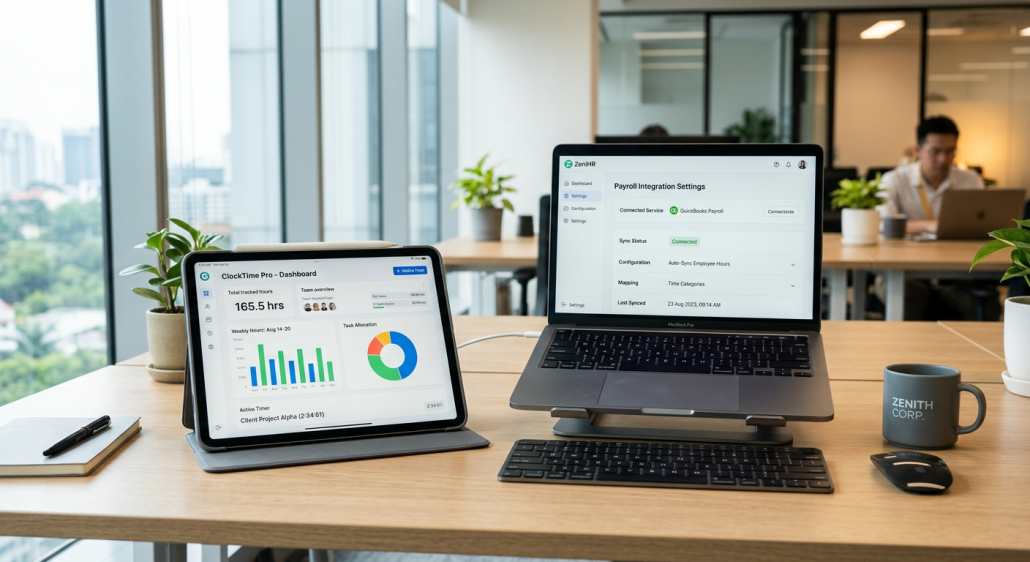
Top Timekeeping System for Employees: 2026 Payroll-Integrated Solutions Compared
Implementing an effective timekeeping system for employees is a cornerstone of modern workforce management. Whether you oversee a remote team, a retail storefront, or a field-based service business, accurate data collection is the only way to ensure payroll precision and project profitability. As digital tools evolve, businesses must transition from manual logs to automated platforms that offer real-time oversight and seamless integration with accounting ecosystems.
Quick Summary
A reliable timekeeping system for employees centralizes attendance, task duration, and labor costs into a unified digital workflow. These platforms eliminate manual entry errors, enforce compliance with labor regulations, and provide actionable insights into staff productivity. Key features include:
– Automated timesheet generation and approval workflows.
– Real-time geolocation tracking for field teams.
– Native integration with major payroll providers.
– Detailed labor reporting and job costing analytics.
Table of Contents
- Quick Summary
- Comparison Table
- Payroll-Centric Time Tracking Platforms
- Standalone Workforce Productivity Suites
- How to Choose the Right System
- FAQ
- Recommended Reads
Comparison Table
| Category | Key Benefit | Ideal For | Primary Integration |
|---|---|---|---|
| Payroll-Integrated | Native ecosystem flow | Small to mid-sized businesses | Accounting/ERP suites |
| Productivity Suites | Deep activity analytics | Remote agencies & developers | Project management tools |
| Specialized Field Tools | Geofencing & kiosk modes | Construction & on-site services | Payroll exports |
Payroll-Centric Time Tracking Platforms
Solutions built directly into accounting software – often categorized as quickbooks time tracking – are designed to minimize administrative friction. When using tools like intuit time tracking, businesses benefit from having a single source of truth for both hours worked and the resulting payroll liabilities. This category is particularly effective for organizations already heavily invested in specific accounting ecosystems.
Historically known as tsheets time tracking, these tools have become the standard for businesses seeking to automate the transition from clock-in to paycheck. By utilizing a tsheets time tracker, managers can rely on pre-built validation rules that flag overtime or missed breaks before they hit the accounting ledger. These systems are highly efficient for users who prioritize “set it and forget it” payroll processing over granular task-level analysis.
Standalone Workforce Productivity Suites
Beyond payroll, many businesses require deeper visibility into how time is spent on specific tasks. A dedicated timekeeping system for employees that functions as a project management platform can offer insights into billable versus non-billable hours. Unlike generic payroll-integrated apps, these tools often include screen monitoring or app usage tracking, providing the “proof of work” necessary for agency-client transparency.
These platforms excel in environments where precise job costing is the primary driver of profitability. By leveraging robust time tracking software, managers can analyze employee activity patterns to optimize resource allocation. This level of granularity is often missing in simpler, payroll-only solutions, making it a critical differentiator for service-based industries like design, legal consulting, and software development.
How to Choose the Right System
Selecting the right system requires balancing your current operational needs with your plans for growth. Start by assessing your workforce structure; a team of remote office workers will have vastly different requirements than a mobile crew of field technicians. If your primary goal is payroll speed, prioritize solutions that offer robust quickbooks time cards functionality to ensure direct data synchronization.
Consider the “human” element of your technology. An intuitive interface is essential for high adoption rates among staff. When workers find it difficult to record their hours, they are more likely to skip logging or enter inaccurate data, which undermines the entire objective of employee monitoring. Always test the mobile interface and clock-in capabilities in the field before committing to a long-term enterprise license.
FAQ
How does a digital timekeeping system improve payroll accuracy?
By automating data entry and enforcing business rules like overtime caps and mandatory breaks, these systems eliminate the human errors associated with manual timesheets, ensuring paychecks match actual work hours.
Can I use a timekeeping system to monitor remote employees?
Yes. Many modern platforms offer app usage logs and automated screenshot features that provide objective data on active work time, protecting both the employer’s budget and the employee’s transparency.
Is integration with accounting software necessary?
It is highly recommended. Native integrations reduce the risk of data entry errors and significantly decrease the time spent on manual administrative tasks during each pay period.


