
12 Remote Employee Management and Time Tracking Strategies for 2026
Remote employee management works best when leaders replace constant observation with clear outcomes, reliable communication, and fair time-tracking practices. These 12 strategies help distributed teams improve accountability, productivity, payroll accuracy, and trust.
Quick Summary
- Define measurable outcomes before tracking activity.
- Explain what work data is collected and why.
- Connect time entries to projects, budgets, and reports.
- Review remote workflows regularly.
12 Remote Employee Management and Time Tracking Strategies
1. Define Outcomes Before Tracking Activity
Set deliverables, deadlines, quality standards, and service levels first. Activity data should provide context, not replace a clear definition of successful work.
2. Create a Written Remote-Work Policy
Document working-hour expectations, availability windows, time-entry rules, security requirements, and escalation paths so every employee follows the same process.
3. Use One Central Time-Tracking System
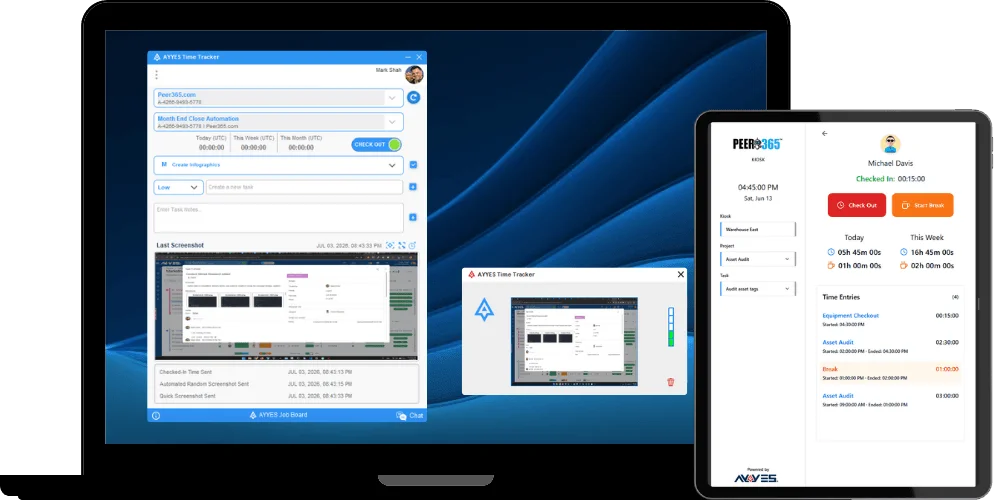
A central time-tracking software platform reduces duplicate records. Employees should record time by project, client, or task without maintaining separate spreadsheets.
4. Automate Routine Time Capture
An automated time tracker reduces forgotten entries and end-of-week estimates. Employees should still review and correct records before approval.
5. Connect Hours to Projects and Budgets
Use project tracking to compare planned and actual hours, identify scope changes, and improve future estimates.
6. Establish a Predictable Communication Rhythm
Use short check-ins for blockers, weekly planning for priorities, and written updates for decisions. Avoid meetings that exist only to prove people are online.
7. Manage Across Time Zones Fairly
Define a limited overlap window for live collaboration and allow focused work outside it. Include time zones with important deadlines.
8. Protect Privacy and Explain Monitoring
Tell employees which work data is collected and how it supports operations. Configure application tracking around legitimate business needs.
9. Review Timesheets Consistently
Set a weekly submission and approval schedule using digital timesheets. Correct errors before payroll or client billing is finalized.
10. Use Reports to Find Workflow Problems
Review time and project reports for recurring delays, rework, and uneven workloads. Discuss causes before judging performance.
11. Recognize Results and Prevent Burnout
Celebrate milestones, reliable client service, and process improvements. Watch for repeated overtime and growing workloads that require rebalancing.
12. Audit the Remote Workflow Quarterly
Review adoption, reporting accuracy, meeting load, security, and employee feedback. Remove unnecessary steps and update training when the process changes.
Implementation Checklist
- Map the current workflow and locate inaccurate data.
- Select metrics tied to delivery, quality, capacity, and customer outcomes.
- Configure projects, team members, timesheets, and reports.
- Run a pilot and collect employee feedback.
- Review results after one month and every quarter.
Common Mistakes
- Tracking without explaining: Provide a clear purpose and policy first.
- Measuring presence instead of results: Online status does not prove valuable work.
- Using too many tools: Multiple systems create inconsistent records.
- Ignoring workload signals: Repeated overtime may reveal poor estimates or understaffing.
Frequently Asked Questions
How can managers avoid micromanaging remote employees?
Track progress against agreed deliverables and milestones. Use time data for planning and billing, not as the sole performance measure.
What should remote time-tracking software include?
Look for project-based entries, corrections, approvals, reports, permissions, exports, and transparent automated tracking.
How often should remote employees submit timesheets?
Weekly submission works for many organizations because it limits forgotten details without creating excessive daily administration.
Can time tracking help prevent burnout?
Yes. Repeated overtime, long workdays, and uneven allocations can reveal workload problems that managers should address.
Manage Remote Work with AYYES
AYYES combines time tracking, projects, team management, timesheets, application insights, and reports in one work-management environment. Explore AYYES.