
Cut Time Tracking Software Costs 10–20% for Decision Makers
Most time tracking software runs on a per user, per month model, typically between $1.99 and $20 or more depending on features. Free plans cover solo freelancers and very small teams well, but once you need integrations, compliance reporting, or attendance tracking, a paid tier almost always costs less overall than the admin hours a free tool demands. Jump to the cost calculator section to run your own numbers.
TL;DR:
- Most time tracking software costs directly scale with active seats, with plans ranging from free for basic features to over $20 per user for advanced automation and compliance.
- Annual billing discounts typically save 10% to 20% compared to monthly payments, but actual savings depend on team size and contract terms.
- Hidden costs such as onboarding, integrations, support, and data export fees can significantly raise the total monthly expense beyond the advertised license prices.
- When choosing a plan, prioritize features that reduce administrative work and operational overhead, as they often lower total ownership costs despite higher list prices.
- Enterprise pricing is usually negotiable and not listed publicly, requiring direct quotes that specify seat counts, support, and integration costs to avoid surprises.
AYYES – Affordable Time Tracking for Growing Teams
AYYES combines time tracking, projects, tasks, timesheets, screenshots, app and website monitoring, and reporting in one platform. It can be a practical choice for businesses that want to control software costs while keeping employee hours, project activity, and productivity information connected in one workspace. Pasted text Key Features:
- Time tracking
- Projects and tasks
- Timesheets and reports
- Screenshot tracking
- App and website monitoring
- Idle-time visibility
- Kiosk access
- Productivity insights
Best For: Small businesses, agencies, remote teams, consultants, project-based teams, growing companies Pricing: AYYES offers a free plan for up to 12 team members at $0. Paid plans cost $0.99 per seat/month or $0.88 per seat/month when billed annually. Advanced monitoring features such as screenshots and app and website monitoring are available on paid plans.
Table of Contents
- How Much Does Time Tracking Software Cost Per User?
- What Are Typical Price Ranges for Time Tracking Plans?
- What Hidden Costs Should You Watch For?
- How Do You Calculate Your Real Monthly Cost?
- Do Annual Contracts and Volume Deals Actually Save Money?
- How Do You Choose the Plan That Actually Minimizes Cost?
- How AYYES Features Reduce Total Cost, Not Just List Price
- Why Enterprise Pricing Almost Never Appears on the Website
- How Does Time Tracking Pricing Compare Across the Market?
- What Does It Cost to Switch Plans or Cancel?
- The Real Cost Question Nobody Asks First
- Try AYYES Before You Commit to a Bigger Contract
- Where to Verify These Price Ranges Yourself
- Sources
- FAQ
How Much Does Time Tracking Software Cost Per User?
Vendors almost universally price by seat: a flat rate multiplied by the number of active users each month. Some charge a small base platform fee on top of that per-seat rate; a handful of enterprise tools use flat organization-wide pricing instead, regardless of headcount. Tiering is where the real cost variation happens. A typical structure looks like this:
- Free tier — basic clock-in/clock-out or manual time logs, limited to a small user cap or feature set.
- Basic/starter — adds reporting, project tagging, or mobile apps for a low per-seat fee.
- Pro/business — unlocks integrations, screenshots, automation, and detailed analytics.
- Enterprise — custom pricing with dedicated support, advanced compliance, and SLAs.
Billing cadence matters more than most buyers realize. Monthly billing gives flexibility but usually carries the highest per-user rate. Annual billing locks in a lower rate in exchange for a year-long commitment, and most vendor pricing pages advertise this discount prominently, though the fine print on whether it applies automatically varies by provider.
What Are Typical Price Ranges for Time Tracking Plans?
Entry-level plans run free to roughly $3 to $5 per user per month, usually capped on features like reporting depth or integration count. Mid-market tools, the tier most growing businesses land on, typically charge $6 to $12 per user per month for a full feature set: project tracking, timesheets, and basic reporting. Advanced and enterprise plans climb to $15 to $25 or more per user, often bundled with custom onboarding and dedicated account management.
By the numbers: Time-tracking software pricing spans $1.99 to $20+ per user per month across the market, with entry-level tools at the low end and advanced platforms with AI automation or compliance features at the high end.
One caution worth flagging early: payroll and time-attendance systems are a different animal. These often price per site, per terminal, or per payroll run rather than per seat, which can push total cost well past what a project-focused time tracker charges for the same headcount.
What Hidden Costs Should You Watch For?
The sticker price rarely tells the whole story. Vendors recoup margin through fees that don’t show up on the pricing page’s headline numbers.
- Implementation and onboarding fees — some vendors bundle this into your subscription; others charge a one-time setup fee, especially for larger rollouts.
- Integrations — connecting payroll, HR, or accounting software often sits behind a premium tier or carries its own monthly add-on.
- API access and advanced reporting — frequently gated to the top plan, even when the base tiers look affordable.
- Premium support — faster response times or a dedicated account manager usually cost extra past the standard tier.
- Seat minimums and overage fees — some contracts require a minimum seat count regardless of actual headcount, and adding users mid-cycle can trigger prorated overage charges.
- Training and data export costs — rarely advertised, but worth asking about before signing, particularly if you plan to switch tools later.
Pro Tip: Ask every vendor for an itemized quote that separates the per-seat license from add-ons. A quote that bundles everything into one number is usually hiding something.
How Do You Calculate Your Real Monthly Cost?
Running the math yourself takes ten minutes and saves you from a nasty invoice surprise later. Gather these inputs first, then work through the steps.
- Count active seats — not total employees, but people who will actually log time. Confirm whether the vendor bills by active seats or total registered users.
- Pick your feature tier — match the tier to what you actually need (reporting, screenshots, integrations) rather than defaulting to the middle option.
- Add mandatory add-ons — payroll integration, premium support, or API access if your workflow requires them.
- Run the formula — (per-user rate × number of seats) + base fees + add-ons = monthly cost. Multiply by 12 for the annual figure, then subtract any annual-billing discount.
- Factor in taxes and trial credits — VAT or sales tax can add several percentage points depending on your jurisdiction, and pilot discounts sometimes only apply for the first 60 to 90 days.
Worked example: A team on a mid-market plan with a per-user monthly rate arrives at a total monthly cost based on their number of seats. Adding payroll integration increases that monthly cost. Annual billing discounts can reduce the total yearly expense by a noticeable percentage, depending on the vendor.
Do Annual Contracts and Volume Deals Actually Save Money?
Annual billing commonly saves 10% to 20% compared to paying monthly, but the exact figure varies enough between vendors that it’s worth confirming before you assume it applies to your quote.
- Volume discounts kick in for larger teams, often at stepped thresholds like 50, 100, or 250 seats.
- Nonprofit, academic, and government pricing exists at many vendors, usually requiring proof of status during signup.
- Pilot program pricing lets you test at a reduced rate or free for a limited window before committing to a full contract.
- Negotiation leverage comes from committed seat counts and multi-year terms. A vendor is far more likely to flex on price for a 100-seat, two-year commitment than a 10-seat monthly plan.
How Do You Choose the Plan That Actually Minimizes Cost?
Price alone is a poor decision filter. The plan that looks cheapest on the pricing page can end up costing more once you factor in the hours your team spends working around missing features. Start by mapping the tool to the actual job: time billing for client invoicing needs different features than payroll compliance or productivity monitoring. A tier built for the wrong job forces workarounds that eat time, and time is the cost you’re trying to control in the first place.
- Ask vendors directly about seat limits, data export options, termination fees, and uptime SLAs before signing anything.
- Run a trial or pilot with a subset of your team before buying seats for the whole organization.
- Confirm whether your required integrations sit behind a paywall on a higher tier.
Pro Tip: Treat the trial period as a stress test, not a formality. Load in a real project with real deadlines and see where the tool creates friction, not just where it looks good in a demo.
How AYYES Features Reduce Total Cost, Not Just List Price
Some time tracking platforms combine time tracking with AI automations, screenshot captures, and compliance reporting, while offering free basic plans and premium tiers for teams that need advanced features. That structure matters for total cost of ownership, not just the sticker price. Automated reporting cuts the admin hours a manager would otherwise spend reconciling timesheets manually. Screenshot capture with privacy blur reduces the back-and-forth of verifying billable hours without adding a monitoring layer that feels invasive. For agencies and project-based teams, that combination often lowers the operational cost buyers overlook when they compare vendors on per-seat price alone, since total cost of ownership depends as much on admin overhead as on the license fee.
Why Enterprise Pricing Almost Never Appears on the Website
If you’ve noticed that most time-tracking vendors list clear per-seat pricing for basic and pro tiers but go quiet at the enterprise level, that’s deliberate. Enterprise pricing depends on seat count, integration complexity, support level, and contract length, variables that don’t fit neatly into a pricing table. That’s not a red flag. It’s standard practice across the software industry, and it’s usually a sign the vendor is willing to negotiate rather than lock every buyer into a rigid rate card. What matters is how transparent the vendor is once you actually ask. A legitimate vendor should be able to give you a written quote breaking down the per-seat rate, any base platform fee, and every add-on, within a day or two of a real conversation about your seat count and feature needs. If a sales team stalls on giving you numbers in writing, or keeps steering the conversation back to a demo instead of a quote, treat that as a signal to keep shopping. Request the quote in writing before you schedule a second call, and ask specifically whether the number includes onboarding, integrations, and support, or whether those get added later. 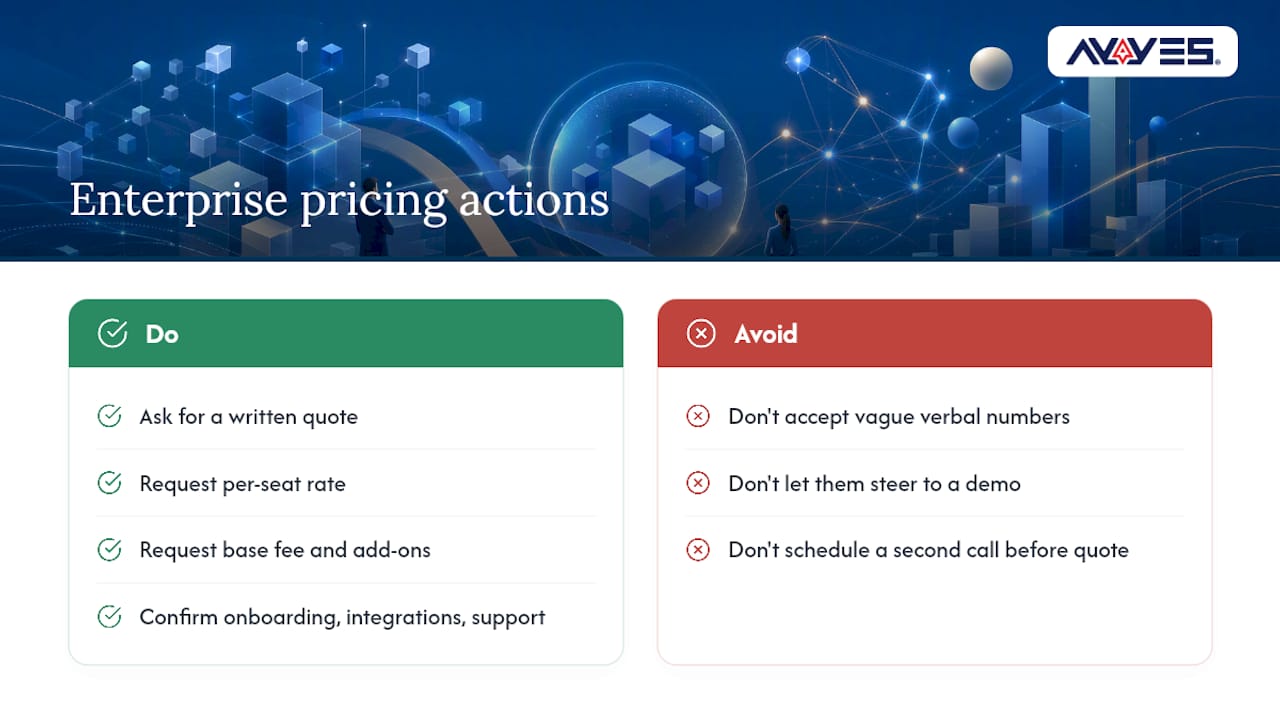
How Does Time Tracking Pricing Compare Across the Market?
Once you’ve seen a handful of quotes, patterns emerge. Entry-level tools cluster tightly in the $0 to $5 per user range because they compete almost entirely on price and simplicity. Mid-market tools spread out more, from $6 to $12, because they’re competing on feature depth: automation, integrations, and reporting quality vary widely at this tier. 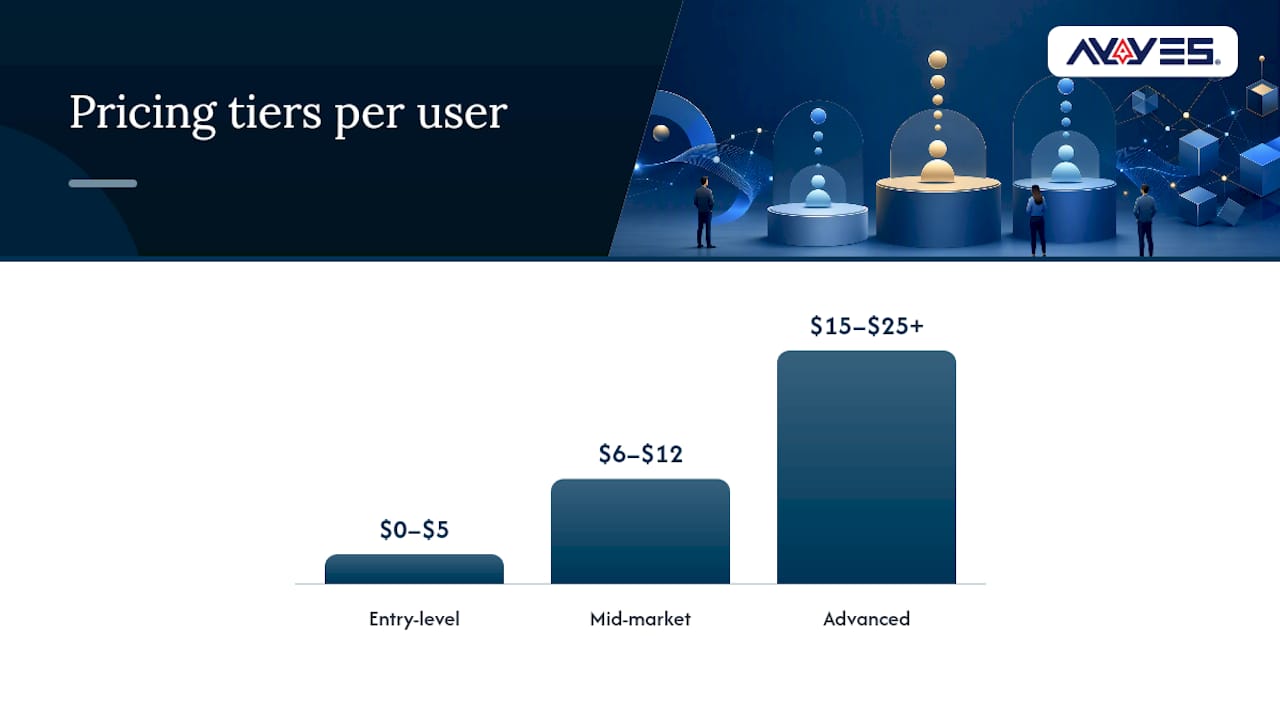 The advanced tier is where price stops being the main differentiator. At $15 to $25 and up per user, you’re really comparing implementation support, data security certifications, and how well each platform handles edge cases like multi-currency invoicing or complex approval chains. The comparison that actually matters isn’t “which tool is cheapest” but “which tool’s price scales sensibly as my team grows.” A tool that’s $4 per user at 10 seats but jumps to $15 per user once you cross a 50-seat threshold can end up costing more than a tool that started at $8 and stayed flat. Ask every vendor for their next-tier trigger point before you commit, not after you’ve outgrown the plan you picked.
What Does It Cost to Switch Plans or Cancel?
Upgrading a plan is usually painless: most vendors prorate the difference and apply it to your next invoice. Downgrading is where friction shows up. Some contracts lock you into your current tier until the billing cycle ends, meaning you keep paying the higher rate even after you’ve decided you no longer need it. Cancellation terms deserve a close read before you sign, not after you want out. Monthly plans typically let you cancel with 30 days’ notice and no penalty. Annual contracts are a different story: canceling mid-term rarely gets you a refund for unused months, and some vendors apply an early-termination fee on top of forfeiting the remaining balance. Data export is the cost that catches teams off guard the most. If a vendor charges for exporting your historical time data, or restricts export formats on lower tiers, migrating away later becomes its own expense. Confirm export policy before signing, not when you’re already trying to leave.
The Real Cost Question Nobody Asks First
Most buyer guides frame time tracking software cost as a simple per-seat comparison exercise, and that’s exactly where they fall short. The list price on a pricing page tells you almost nothing about what a tool will actually cost your organization over a year of real use. The math that matters is list price plus hidden add-ons plus the admin hours your team spends fighting the tool’s limitations. A $4 per user plan that requires two hours of manual timesheet reconciliation every week is more expensive than a $9 per user plan that automates that work away. Decision-makers who only compare sticker prices consistently underestimate this gap, then get surprised six months in when the “cheap” option turns out to require a part-time administrator to babysit it. My honest read: prioritize the tools that reduce operational drag first, price second. A platform built around automation and clear reporting, the category AYYES sits in, tends to win that total-cost comparison even when its list price sits a notch above the bargain-tier competitors. Cheap software that creates work is never actually cheap.
— Mark
Try AYYES Before You Commit to a Bigger Contract
Some platforms are practical next steps if your team needs AI automations, detailed reporting, screenshot-based accountability, or attendance tracking without the admin overhead that eats into a “cheap” plan’s savings. 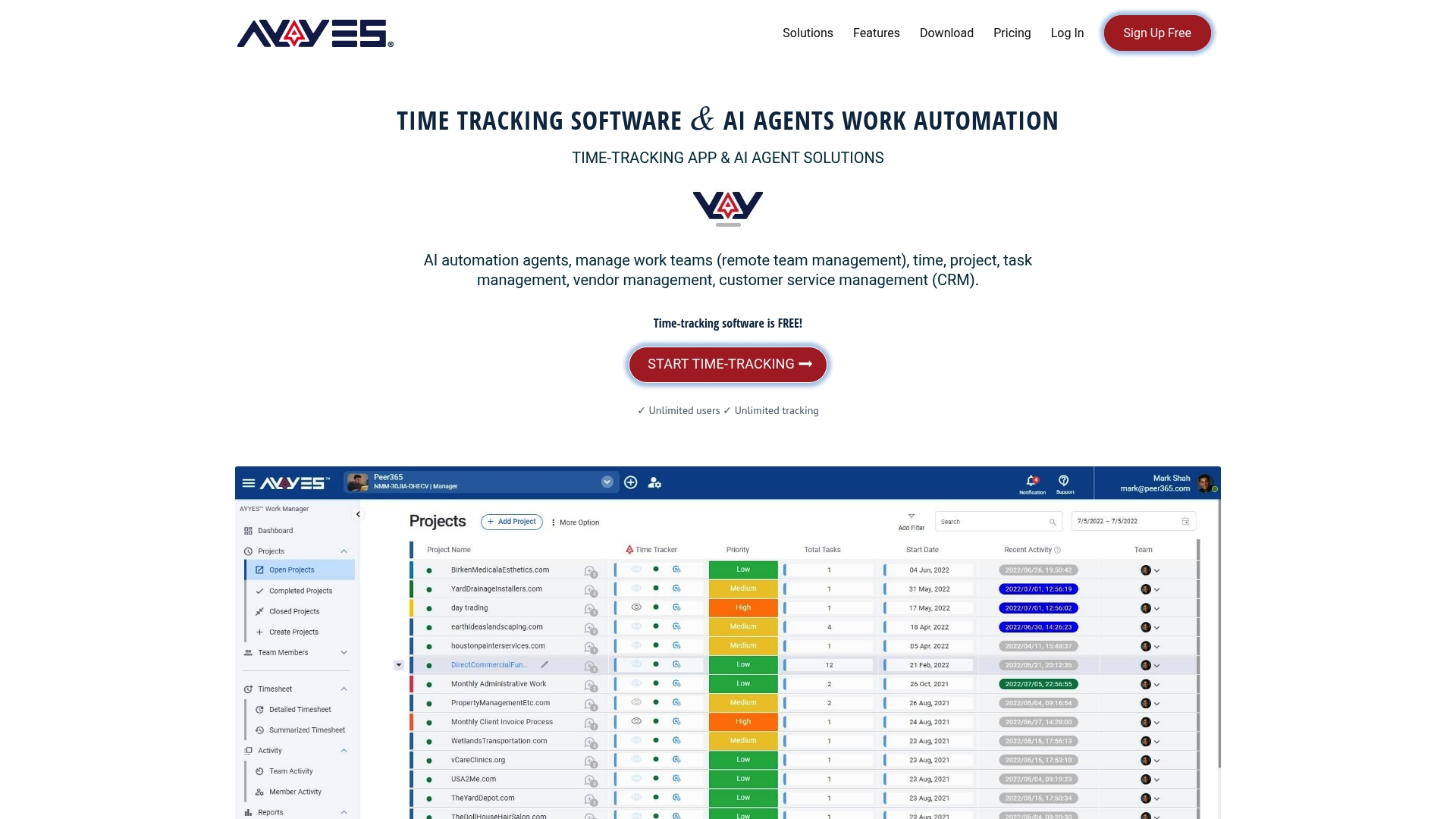 Rather than guessing at what a mid-market or enterprise quote might include, run your own numbers using the calculator steps above, then compare them against the AYYES free forever plan for up to 12 team members and premium tiers. The free plan for up to 12 team members works well if you’re a freelancer or a small team logging hours without much overhead. Once you need automation, compliance reporting, or attendance features, upgrading is straightforward and the pricing stays transparent instead of vanishing behind a “contact sales” wall. Start with the free plan for up to 12 team members or request a demo on the AYYES landing page to see whether the premium features pay for themselves in the admin hours they save. AYYES offers a free plan for up to 12 team members.
Where to Verify These Price Ranges Yourself
For deeper vendor comparisons, check Capterra’s time tracking software directory and Zapier’s roundup of time tracking apps.
Sources
FAQ
Is There a Free Time Tracking Software Option
Yes. Most major vendors, AYYES included, offer a free tier for up to 12 team members that covers basic clock-in and manual time logging for individuals or small teams, though advanced reporting and integrations usually require a paid upgrade. AYYES offers a free plan for up to 12 team members.
Is Clockify Totally Free
Clockify offers a free plan with unlimited users and basic tracking, but features like advanced reporting, admin controls, and certain integrations sit behind paid tiers.
Is Google Timesheet Free
Google Sheets templates for timesheets are free since they run on your existing Google Workspace or free Google account, but they require manual entry and lack automated tracking, reporting, or compliance features that dedicated software provides.
How Can I Track My Hours for Free
Free time tracking is possible through a no-cost tier for up to 12 team members on tools like AYYES, spreadsheet templates, or basic browser extensions, though you’ll trade away automation, detailed analytics, and integrations that paid plans include. AYYES offers a free plan for up to 12 team members.
What Is a Typical Monthly Fee for Time Tracking Software
Most teams land between $6 and $12 per user per month for a full-featured mid-market plan, with entry-level tools starting free or under $5 and enterprise plans running $15 to $25 or more per seat.