10 Best Employee Monitoring Software for 2027
Choosing the best employee monitoring software requires a balance between workforce visibility, productivity and employee trust. For businesses managing remote, hybrid or distributed teams, understanding how work time is used can help improve resource allocation, identify workflow bottlenecks and support better project decisions. The goal of employee tracking should not be unnecessary surveillance.
The right employee tracking software provides useful, data-driven insights into working hours, applications, websites, tasks and productivity patterns while allowing businesses to maintain transparent monitoring policies. Modern employee monitor software can also reduce manual administration by combining time tracking, activity monitoring and productivity reporting in one platform. This gives managers more objective information while giving employees clearer records of their work.
Quick Summary: Best Employee Monitoring Software in 2027
The best employee monitoring software helps businesses understand digital workflows while supporting productivity, accountability and transparency.
A suitable employee tracking app should make it easier to:
- Understand how employees spend their working hours.
- Automatically record time and work activity.
- Identify productivity patterns and workflow bottlenecks.
- Create accurate timesheets for payroll and billing.
- Monitor applications and websites used during work.
- Provide proof of work for remote teams and client-facing businesses.
- Generate reports that support better workforce decisions.
- Apply monitoring controls without creating unnecessary surveillance.
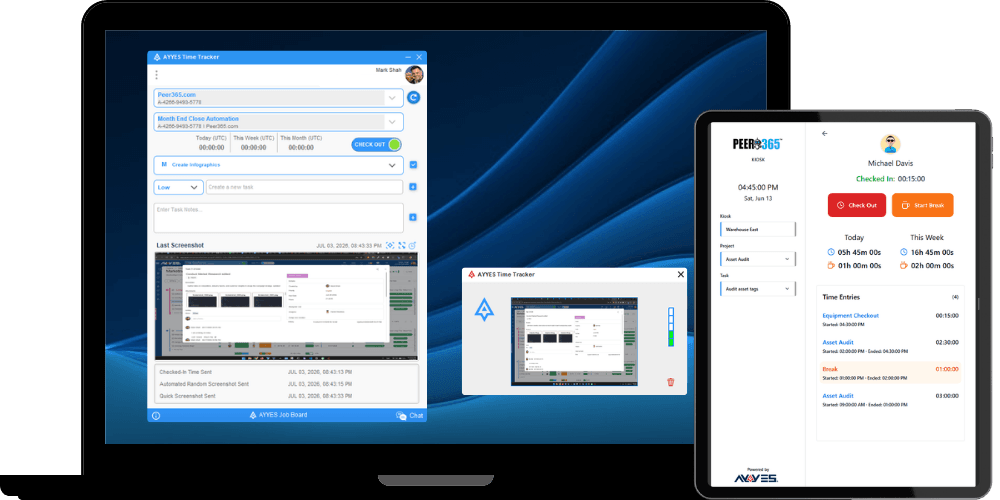
For businesses that want employee monitoring combined with time tracking, project management and proof of work, AYYES provides screenshots, app and website tracking, activity monitoring, idle detection, automated time tracking and productivity reporting within the same platform.
Employee Tracking Software Comparison
Employee tracking software generally falls into several categories depending on how much workforce visibility a business needs.
| Category | Core Features | Advantages | Limitations | Best For |
| Work Management Platforms | Project management, tasks and tracking | Centralised workflow visibility and scalability | Can require more setup | Agencies and growing teams |
| Desktop Activity Monitoring | Screenshots, app usage and activity logs | Detailed productivity visibility | Can feel intrusive without clear policies | Remote and computer-based teams |
| Time Tracking Software | Timesheets, attendance and clock-in tools | Easy adoption and payroll accuracy | May provide less detailed activity analysis | Hourly, remote and field teams |
The best solution depends on whether your organisation primarily needs time tracking, detailed employee activity monitoring, project visibility or a combination of these capabilities.
Also Suggest this : Best Time Tracker Software for Freelancers and Teams
How We Selected the Best Employee Monitoring Software
Employee monitoring products can look similar at first glance, so businesses should compare them using consistent criteria rather than selecting the product with the longest feature list. The software included in this guide is considered based on the features that matter most when monitoring productivity, recording working time and maintaining employee transparency.
Employee Activity Tracking
A useful employee tracking system should help businesses understand how working time is being used without requiring constant manual status updates. Activity information can help managers recognise periods of focused work, idle time and possible productivity bottlenecks.
Screenshots and Proof of Work
Screenshots can provide additional context when businesses need visual confirmation of completed work, particularly for remote employees, contractors and teams billing clients by the hour. Screenshot monitoring should also include appropriate privacy controls so sensitive information is not collected unnecessarily.
App and Website Tracking
Application and website tracking helps managers understand which digital tools employees use during their working sessions. Rather than looking at isolated activity, managers can use these reports to identify useful applications, workflow inefficiencies and potential distractions.
Privacy and Employee Transparency
Monitoring should be clearly communicated to employees. Businesses should explain what information is collected, why monitoring is being introduced, when tracking occurs and who can access the information. Transparency can make employee tracking feel more like a productivity tool and less like surveillance.
Reporting and Productivity Insights
Raw activity data has limited value unless it can be converted into useful reports. Strong monitoring platforms provide timesheet, activity, productivity and project reports that help managers identify trends and make better decisions.
Integrations and Ease of Use
Employee tracking software should fit into the tools and workflows employees already use. Complicated software that requires constant administration can create more work instead of reducing it.
Pricing and Overall Value
Businesses should compare pricing against the actual features they need. The cheapest employee tracking app is not necessarily the best value if essential functions require separate software or expensive upgrades.
10 Best Employee Monitoring Software Tools for 2027
The following employee monitoring tools serve different workforce needs. Some focus on time tracking, while others provide deeper productivity analytics, security monitoring or workforce intelligence.
1. AYYES – Best for Transparent Employee Monitoring and Time Tracking
AYYES combines employee monitoring, time tracking, project management, and productivity reporting in one platform. Teams can track work time, review screenshots, monitor app and website usage, identify idle periods, and connect recorded activity with projects, tasks, timesheets, and reports.
Key Features: Automatic time tracking, screenshot monitoring, screenshot blur, app and website tracking, idle detection, activity levels, project tracking, task management, timesheets, activity logs, kiosk time clock, productivity reports.
Best For: Remote teams, agencies, contractors, small businesses, distributed teams, client-based teams.
Pricing: AYYES has a free plan for up to 12 team members. Paid plans are $0.99 per seat per month, or $0.88 per seat per month billed annually. Screenshot tracking, activity logs, and AI automation are paid features and are not included on the free plan. See AYYES pricing.
2. Hubstaff – Best for Remote Employee Tracking
Hubstaff combines employee monitoring with time tracking and workforce management. Managers can review employee activity, app and URL usage, idle time, and optional screenshots while connecting tracked hours with projects and reports.
Key Features: Time tracking, activity monitoring, screenshots, screenshot blur, app tracking, URL tracking, idle-time detection, project tracking, workforce reports.
Best For: Remote teams, distributed teams, agencies, contractors, project-based businesses.
3. Time Doctor – Best for Workforce Analytics
Time Doctor helps businesses track employee time while providing visibility into productivity and digital activity. Managers can review app and website usage, idle time, screenshots, screen recordings, productivity ratings, schedules, and detailed reports.
Key Features: Time tracking, app monitoring, website monitoring, idle-time tracking, screenshots, screen recording, productivity ratings, scheduling, reporting.
Best For: Remote teams, hybrid teams, large teams, agencies, outsourcing companies, service businesses.
4. ActivTrak – Best for Productivity Analytics
ActivTrak focuses on workforce productivity and behaviour analytics. It helps organisations understand how employees spend their time, which apps and websites are used, workload patterns, productivity trends, and opportunities to improve team efficiency.
Key Features: Productivity analytics, app usage, website usage, work pattern analysis, workload insights, workforce trends, productivity classification, employee activity reporting.
Best For: Mid-sized businesses, enterprises, HR teams, operations teams, productivity-focused organisations.
5. Teramind – Best for Security and Employee Monitoring
Teramind combines detailed employee monitoring with security-focused controls. Businesses can monitor screens, applications, websites, employee behaviour, and productivity while using alerts and activity insights to support security and compliance requirements.
Key Features: Screenshots, screen playback, app monitoring, website tracking, productivity analytics, behaviour alerts, employee activity monitoring, security controls.
Best For: Enterprises, security-focused teams, regulated businesses, compliance teams, large organisations.
6. Insightful – Best for Employee Productivity Monitoring
Insightful provides employee monitoring, timekeeping, attendance tracking, and productivity analytics in one platform. Managers can monitor employee activity in real time, review apps and websites, capture screenshots, and generate workforce reports.
Key Features: Real-time monitoring, productivity analytics, app classification, website classification, attendance tracking, timekeeping, screenshots, workforce reports.
Best For: Remote teams, hybrid teams, operations teams, productivity-focused businesses, growing companies.
Key Features to Look for in Employee Tracking Software
Different businesses require different levels of visibility. Before selecting employee tracking software, consider which information will genuinely help your organisation improve performance and operational efficiency.
1. Employee Activity Monitoring
Employee activity monitoring provides information about how working time is distributed throughout the day. Active and idle periods can help managers identify productivity patterns, workflow problems and situations where employees may need additional resources or support.
2. Time Tracking and Attendance
Reliable time tracking remains one of the most useful features for remote, office and field workforces. Automatically recorded hours can reduce dependence on manual timesheets and create more accurate records for attendance, payroll, project costing and client billing.
3. Screenshot Monitoring
Screenshots provide visual proof of work when additional verification is necessary. They are particularly useful for remote work and client-facing services, but businesses should provide appropriate privacy controls and communicate screenshot policies clearly.
4. App and Website Usage Tracking
App and website tracking gives managers more context about how digital working time is being used. The objective should be to understand productivity patterns and workflow efficiency rather than simply identify individual websites.
5. Productivity Reports and Analytics
Reporting turns individual tracking events into useful information. Managers can use productivity reports to compare workloads, review project progress and understand which processes or tools consume the most working time.
6. Privacy and Monitoring Controls
Businesses should be able to determine which monitoring features are active and when they operate. Privacy-focused controls such as screenshot blurring, access restrictions and work-hours-only tracking can help maintain a more transparent monitoring environment.
Benefits of Employee Monitoring and Tracking Software
When implemented transparently, employee monitoring software can provide benefits for both managers and employees.
1. Improve Workforce Productivity
Activity and productivity information helps managers understand where working hours are being spent. Instead of making decisions based on assumptions, businesses can identify inefficient workflows and focus on improving the processes that slow teams down.
2. Create Accurate Timesheets
Automated tracking reduces the burden of manually reconstructing working hours. More accurate timesheets can also simplify payroll, project costing and client billing while reducing avoidable administrative errors.
3. Identify Workflow Bottlenecks
Detailed time and activity information can reveal where projects repeatedly slow down. Managers can then determine whether the problem relates to workload, software, processes, communication or resource allocation.
4. Improve Payroll and Billing Accuracy
When working hours are connected with projects and tasks, organisations gain clearer records of labour costs and billable work. This is particularly useful for agencies, consultancies and other businesses that charge clients based on hours worked.
5. Support Remote and Hybrid Teams
Managers cannot rely on physical visibility when employees work from different locations. Employee tracking software creates a shared digital record of time, tasks and activity without requiring constant messages or status meetings.
6. Provide Transparent Proof of Work
Proof of work can help resolve questions about project hours, client invoices and task completion. For employees, objective records can also demonstrate the work they have completed without relying entirely on manual updates.
How to Choose the Best Employee Monitoring Software
Choosing the right monitoring tool depends heavily on your team’s environment, business model and reason for implementing employee tracking.
1. Decide What You Need to Track
Start by identifying the actual problem you are trying to solve. A business focused on payroll may only need accurate time and attendance records, while a remote agency may also need screenshots, application usage and project-level proof of work.
2. Compare Employee Monitoring Features
Compare features against your requirements rather than choosing the platform with the longest list. Important capabilities can include automatic time tracking, screenshots, idle detection, app and website monitoring, timesheets, reports, project tracking and productivity analytics.
3. Check Employee Privacy Controls
Consider whether tracking can be limited to working hours and whether sensitive information can be protected. Features such as screenshot blurring and configurable monitoring controls can make a substantial difference to employee acceptance.
4. Consider Ease of Use
Monitoring software should reduce administrative effort rather than create more of it. Test how easily employees can track time, understand their own data and complete normal work without repeatedly interacting with the tracking system.
5. Check Desktop and Mobile App Support
Consider where employees actually perform their work. Office and remote employees may rely mainly on desktop applications, while field teams can benefit from mobile or browser-based time tracking.
6. Compare Integrations
If employee monitoring data also needs to support project management, payroll, billing or collaboration, review the available integrations before selecting a platform.
7. Compare Pricing as Your Team Grows
Calculate costs based on your expected team size rather than only the introductory price. Also check whether important features are limited to higher-priced plans.
8. Test the Software Before Deployment
Pilot employee monitoring software with a small representative group. This gives managers an opportunity to test reporting accuracy while employees can provide feedback about usability and privacy before a larger rollout.
How Much Does Employee Monitoring Software Cost?
Employee monitoring software pricing varies according to team size, monitoring depth and the features included. Basic solutions may concentrate on time tracking and attendance, while advanced products can include screenshots, app and website monitoring, productivity analytics, workforce reporting and security functions.
When comparing costs, businesses should look beyond the headline monthly price and consider:
- Price per employee or seat.
- Monthly versus annual billing.
- Free-plan or trial availability.
- Limits on screenshots or data storage.
- Reporting features.
- Project and task management.
- Number of users or managers supported.
- Integrations.
- Support level.
- Additional enterprise or security features.
AYYES currently offers a free tier for 12 seats and paid monthly and annual options. Because pricing can change, confirm the latest rates on the official pricing page before publishing or making a purchasing decision. AYYES offers a free plan for up to 12 team members.
Employee Monitoring Software Privacy and Legal Considerations
Employee monitoring can involve personal and workplace data, so businesses should consider privacy requirements before implementation. Requirements vary by country, state and jurisdiction. Employers should review the laws that apply to their workforce and obtain professional legal guidance when necessary.
1. Inform Employees About Monitoring
Transparency should be built into the implementation process. Employees should understand which information is collected, when tracking occurs, the business purpose for collecting it and how that information may be used.
2. Monitor Only What Is Necessary
Collect information that relates directly to legitimate business requirements. Tracking more information than the organisation actually needs can increase privacy concerns without producing better productivity insights.
3. Protect Sensitive Employee Information
Monitoring data should be accessible only to authorised people. Businesses using screenshot monitoring should consider controls such as image blurring, restricted access and clear retention policies.
4. Create a Written Employee Monitoring Policy
A documented policy can define the purpose and boundaries of monitoring. It should explain which devices and activities may be monitored, which features are enabled, how the information is protected and who employees can contact with questions.
Why Choose AYYES for Employee Monitoring and Tracking?
AYYES combines workforce visibility with the time, project and reporting information businesses already need to manage everyday work. Instead of treating employee tracking as a separate surveillance system, AYYES connects monitoring information with working hours, projects, tasks and productivity reporting.
1. Transparent Employee Monitoring
Employee monitoring works best when teams understand why information is being recorded. AYYES is designed around providing objective work information such as time, applications, websites, activity and screenshots so managers can evaluate workflows rather than rely on assumptions.
2. Automated Time and Activity Tracking
The AYYES desktop tracker can automatically record working sessions and activity information. This reduces dependence on manual timesheets while producing clearer records of time spent across projects, clients and tasks.
3. Screenshots With Privacy Controls
Screenshots can provide visual proof of work while screenshot blurring helps protect information that does not need to be visible. AYYES currently provides configurable screenshot blurring together with automatic screenshot capture during tracked sessions.
4. App and Website Usage Tracking
AYYES records application and website usage during tracked work. Managers can use this information to understand where digital time is being spent, while productivity classifications can help identify productive, unproductive and idle periods.
5. Productivity Reports and Workforce Insights
Time records become more useful when they can be analysed. AYYES provides timesheets, employee activity information, screenshots, app and website breakdowns and productivity reporting to help businesses understand how time connects with actual work.
6. Simple Setup for Remote and Hybrid Teams
Teams can use different tracking methods depending on how they work, including web and desktop-based tracking. This allows organisations to maintain more consistent work records across office, remote and distributed teams.
Start Tracking Employee Productivity With AYYES
Employee monitoring should create clarity, not additional management work. AYYES brings time tracking, employee activity, screenshots, app and website usage, projects, tasks and reporting into one connected workspace. Use objective data to understand how work gets done, improve timesheet accuracy and give managers and employees greater visibility into productivity. Start using AYYES to build a more transparent, accountable and productive workforce.
Also Suggest this : Best Time Tracking Software for Consultants
Employee Monitoring Software FAQs
1. Is Employee Monitoring Software Legal?
Yes, employee monitoring is legal in many locations when used for legitimate business purposes. Employers should inform workers, follow local privacy and employment laws, and obtain consent where required.
2. How Can Employee Monitoring Software Be Used Without Hurting Team Morale?
Use monitoring transparently by explaining what is tracked, why it is needed, and how it benefits the team. Clear policies and privacy controls help employees see monitoring as a productivity tool rather than surveillance.
3. What Is the Difference Between Employee Monitoring and Time Tracking?
Time tracking records how long employees work on tasks, projects, or shifts. Employee monitoring provides deeper insights such as app usage, website activity, screenshots, active time, idle time, and productivity patterns.
4. What Is the Best Employee Monitoring Software in 2027?
The best software depends on your business needs. AYYES is a strong option for teams needing time tracking, screenshots, app and website monitoring, activity tracking, projects, and productivity reports in one platform.
5. What Is Employee Tracking Software?
Employee tracking software helps businesses monitor working hours and workforce activity. It may track attendance, applications, websites, screenshots, active and idle time, projects, tasks, and productivity data.
6. What Can Employee Monitoring Software Track?
Employee monitoring software can track working hours, attendance, active and idle time, applications, websites, screenshots, projects, tasks, timesheets, productivity patterns, and sometimes employee locations.
7. What Is the Best Employee Tracking App?
The best employee tracking app depends on how your team works. AYYES is suitable for teams needing automated time tracking, employee activity monitoring, screenshots, app and website tracking, and productivity reporting.
8. Can Employee Monitoring Software Take Screenshots?
Yes. Many employee monitoring tools can capture screenshots during working sessions. Screenshots provide proof of work and productivity context, while privacy controls such as screenshot blurring can help protect sensitive data.
9. How Much Does Employee Monitoring Software Cost?
Employee monitoring software pricing depends on team size, features, and billing plans. Some tools offer free plans or trials, while paid options usually charge per user and may cost more for advanced analytics or security features.