
Cut No Shows: Manager Playbook for Employee Scheduling Best Practices
The most effective scheduling approach is a data-driven coverage grid built from employee availability, published at least one week ahead, and automated where possible. This week, do four things: map coverage to actual demand, collect availability before you build anything, publish on a fixed weekly cadence, and move recurring shifts into a reusable template. The five-step process and troubleshooting checklist below show exactly how.
TL;DR:
- Collect employee availability and preferences separately to ensure schedules reflect actual constraints and volunteer shifts without guesswork.
- Publish schedules at least two weeks in advance to reduce last-minute callouts by up to 30 percent, allowing staff better planning.
- Use templates and copy last week’s pattern to build schedules quickly, flag conflicts early, and avoid hours of manual work each week.
- Maintain a 10 to 15 percent coverage buffer and cross-train staff to handle absences and sudden demand changes smoothly.
- Prioritize automation features like availability collection, open-shift marketplaces, and overtime alerts in scheduling software to save time and prevent errors.
Track Team Time With More Clarity
AYYES helps teams record working hours, connect time with projects and tasks, and review activity through screenshots, timesheets, and reports. Managers can use this information to understand workloads, identify where project time is being spent, and maintain clearer records across remote, hybrid, and office-based teams. The platform also supports growing teams with a free plan for up to 12 members. Paid plans start at $0.88 per seat/month with annual billing or $0.99 per seat/month with monthly billing, adding access to more advanced monitoring and reporting features.
Table of Contents
- Employee Scheduling Best Practices to Apply This Week
- What Is the Best Weekly Process for Building a Schedule?
- Which Scheduling Software Features Actually Save Time?
- How Do You Keep Shift Assignments Fair and Legal?
- Which Scheduling KPIs Should You Track Every Month?
- How Do You Fix Common Scheduling Failures Fast?
- How Time-Tracking Data Improves Scheduling Decisions
- Why Weekly Scheduling Is a Strategic Workforce Signal
- A Practical Next Step for Managers Ready to Automate
- Sources
- FAQ
Employee Scheduling Best Practices to Apply This Week
Every scheduling problem managers bring up, from chronic understaffing to last-minute no-shows, traces back to one of five fixable habits. Fix these in order and the rest of your scheduling headaches shrink on their own.
- Collect availability and preferences before you build anything. Ask employees for hard constraints (when they cannot work) separately from preferences (shifts they would rather have). Blending the two produces a schedule built on guesses, and it hides who would actually volunteer for a Sunday closing shift if asked directly.
- Publish at least 7 to 14 days ahead. Teams that post schedules two or more weeks out see 20 to 30% fewer last-minute callouts than teams that publish inside a week. Employees plan child care, second jobs, and appointments around a schedule they can trust.
- Use templates and copy-forward recurring patterns. Rebuilding a roster from a blank grid every week wastes hours and invites mistakes. Managers who start from a template and adjust only the exceptions report building a full week’s schedule in well under an hour.
- Hold a 10 to 15% coverage buffer and cross-train your team. A buffer absorbs the sick call, the late arrival, and the sudden rush without forcing you to beg for volunteers. Cross-training two or three people per role means that buffer can actually plug any gap, not just one.
- Make swaps and open shifts simple, visible, and mobile-first. A swap that requires three text messages and a manager’s memory will fail under pressure. A posted open shift with a one-tap claim and an automatic approval rule will not.
Pro Tip: Run availability collection on the same day every week, like every Thursday by 5 p.m. A fixed deadline trains employees to submit on time without you having to chase anyone down.
What Is the Best Weekly Process for Building a Schedule?
A repeatable five-step cycle turns scheduling from a recurring fire drill into a 30 to 60 minute task. Run these steps in order, every week, and each one gets faster as your templates and habits mature.
- Map coverage to real demand. Break the week into 15 to 30 minute blocks and staff against actual sales, foot traffic, or ticket volume, not gut feeling. A retail floor needs more bodies at 6 p.m. on Friday than at 10 a.m. on Tuesday, and your data should say so explicitly.
- Collect availability on a set cadence. Weekly works for hourly retail and restaurant staff with variable patterns; monthly works for teams with stable, predictable hours. Capture preferences alongside constraints so you know who wants extra hours.
- Build from your template, then check conflicts. Copy last week’s pattern forward, flag any overtime risk before you finalize it, and rotate premium or undesirable shifts so the same person is not always stuck closing.
- Publish to one single source of truth. Post the finished schedule somewhere every employee can check on a phone, with a push notification confirming it went live.
- Handle exceptions through a documented process. Swap requests go through an approval step, open shifts post to a claimable list, and callouts follow a written notification chain.
| Step | Typical time required | Key output |
|---|---|---|
| Map coverage to demand | 15–20 minutes | Staffing targets by hour/shift |
| Collect availability | Ongoing, weekly deadline | Constraints and preferences list |
| Build from template | 20–30 minutes | Draft schedule, conflicts flagged |
| Publish to single source | 5 minutes | Live schedule with notifications |
| Handle exceptions | As needed | Approved swaps, filled open shifts |
Managers who collect availability first and build from a template can complete this entire cycle in about 30 minutes instead of several hours of manual back-and-forth.
Which Scheduling Software Features Actually Save Time?
Not every feature in a scheduling tool earns its subscription price. A handful of capabilities account for most of the time savings managers report, and the rest is largely convenience.
- Drag-and-drop builder. Lets you rearrange shifts visually instead of retyping names into a grid.
- Built-in availability collection. Employees submit constraints and preferences directly into the system that builds the schedule, closing the gap between a text message and a spreadsheet.
- Mobile app access. Employees check their shifts, request swaps, and get notifications from a phone, which matters more than any desktop feature for hourly staff.
- Open-shift marketplace. Unfilled shifts post automatically to eligible staff instead of triggering a group text chain.
- Overtime alerts. The system flags a schedule that pushes someone over 40 hours before you publish it, not after payroll runs.
- Single-source publishing. One schedule, one link, one notification, so nobody is working off a printed copy taped to the break room wall.
A spreadsheet is genuinely fine for a team of five or fewer with stable, repeating shifts and almost no swap activity. The moment you are manually tracking overtime thresholds, chasing availability by text, or rebuilding the same grid every week, that is your signal to upgrade. Centralizing schedule sharing and automating availability, swaps, and notifications cuts errors that spreadsheets simply cannot catch on their own. Pro Tip: When you configure a new tool, set swap approvals to require manager sign-off and turn on audit logs from day one. Retrofitting an approval trail after a dispute is much harder than starting with one. 
How Do You Keep Shift Assignments Fair and Legal?
Unpredictable, uneven schedules are a documented driver of turnover, while advance notice and consistent rules improve retention and reduce stress. Fairness has to be built into the process, not applied case by case when someone complains.
- Keep a rotation board with written criteria. Decide in advance who gets first pick of premium shifts and who rotates through undesirable ones, and put the rule in writing so it survives you being on vacation.
- Set a deadline for time-off requests and availability submissions. Spell out the consequence for missing it, whether that means the manager assigns hours or the employee is scheduled around others’ preferences that week.
- Define an approval turnaround. Employees should know whether a swap or time-off request gets answered within a day, not left hanging until the schedule posts.
- Check overtime rules before you finalize a schedule. Under the Fair Labor Standards Act, non-exempt employees who exceed 40 hours in a workweek are owed overtime pay, and hours must be tracked accordingly.
- Confirm local predictive-scheduling rules. Several cities and states require 7 to 14 days of advance posting before a schedule takes effect, so check your jurisdiction rather than assuming federal rules are the whole picture.
- Log every availability change, swap, and approval. An audit trail protects you in a dispute and gives you the data to prove your rotation is actually fair.
Which Scheduling KPIs Should You Track Every Month?
Four numbers tell you almost everything about whether your schedule is working: adherence, change frequency, time-to-fill, and overtime hours. Pull them from timesheets, point-of-sale data, or your time-tracking system, and review them monthly rather than reacting to each one in isolation.
| KPI | What it measures | Signal of a problem |
|---|---|---|
| Schedule adherence | % of shifts worked as scheduled | Below target suggests unclear communication or unrealistic shifts |
| Change frequency | How often the published schedule is edited after posting | High frequency points to poor initial coverage mapping |
| Overtime hours | Hours worked beyond 40/week per employee | Rising trend signals understaffing or template drift |
| Time-to-fill | Time to fill an open or dropped shift | Slow fill times mean your open-shift process is not working |
Tracking these four metrics consistently is the fastest way to catch a schedule problem before it becomes a staffing crisis. If change frequency climbs month over month, your template no longer matches real demand. If overtime creeps up on the same two or three names, that is a coverage buffer problem, not an individual performance issue.
How Do You Fix Common Scheduling Failures Fast?
Most scheduling emergencies fall into a handful of repeatable patterns, and each one has a fast, specific fix rather than a general “communicate better” answer.
- Uncovered shift starting soon: Post it to the open-shift marketplace immediately, call your top two volunteers directly, and consider a small incentive like first pick of next week’s premium shift.
- Repeated no-shows from the same person: Check whether the schedule published late, whether that person keeps drawing the worst rotation, or whether they never actually confirmed receiving it.
- Overtime creeping up week over week: Audit whether your coverage buffer shrank or your template is understaffing a specific shift, then adjust the template rather than absorbing the overtime as a one-off.
- Scheduling itself eating hours of manager time: That is the clearest sign you have outgrown a spreadsheet and need availability collection and template automation built into your process.
If a no-show pattern persists after you fix the publish timing and rotation fairness, escalate to HR and treat it as a hiring or performance conversation, not a scheduling one.
How Time-Tracking Data Improves Scheduling Decisions
Scheduling assumptions only hold up if the hours actually worked match the hours you planned for. Time-tracking data closes that gap by showing where a shift consistently runs long, where idle time signals overstaffing, and where overtime is quietly accumulating before payroll reveals it. Platforms combining time-tracking with AI automations can flag staffing risk before it becomes a payroll surprise:
- Validating coverage assumptions against actual clocked hours, not planned ones.
- Surfacing likely overtime or undercoverage windows before you publish the next schedule.
- Supporting a workflow where availability feeds an auto-fill draft, rule-based assignments catch conflicts, and an alert fires when anyone approaches an overtime threshold.
Used this way, time-tracking data becomes a feedback loop for the schedule itself, not just a payroll record.
Why Weekly Scheduling Is a Strategic Workforce Signal
Weekly scheduling data is a leading indicator most managers throw away instead of using. Every availability submission, swap request, and overtime spike is a data point about where your labor pool is straining, and that data feeds directly into the kind of future-back workforce planning that Bain frames around a multi-year horizon rather than next week’s roster. Cross-training and consistent record-keeping are what let a business pivot when demand shifts or a labor market tightens. Treat your weekly schedule as raw material for a strategic decision, not just an administrative chore, and you will spot capability gaps months before they become hiring emergencies.
— Mark
A Practical Next Step for Managers Ready to Automate
Everything above works better with a system that captures availability, tracks hours against the plan, and flags overtime before it hits payroll, instead of a manager doing all three manually every week. Some platforms combine time-tracking with AI automations to capture actual hours worked, surface undercoverage or overtime risk early, and provide a unified dashboard instead of multiple disconnected tools. 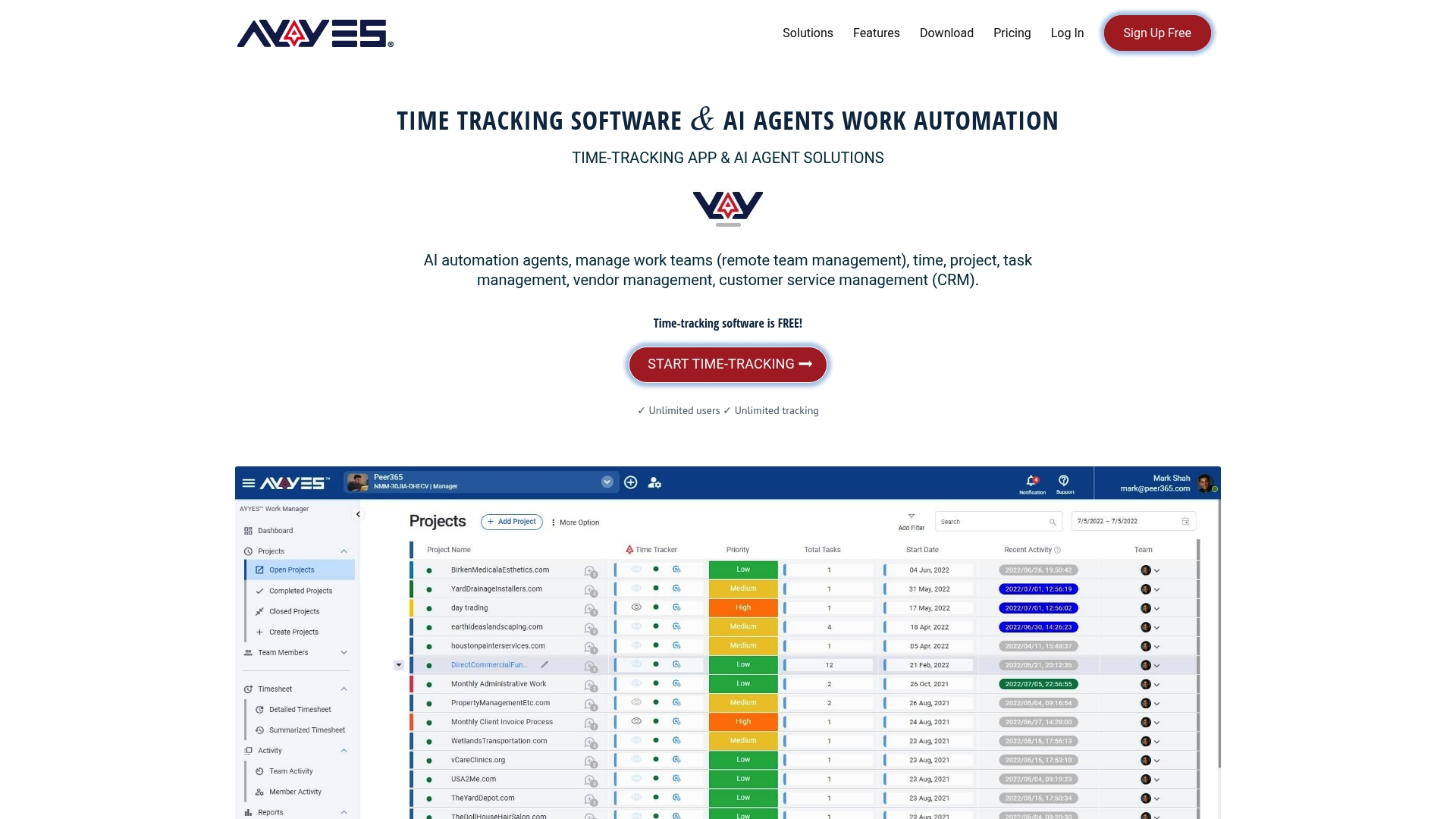 If you are still stitching together availability texts, a shared spreadsheet, and a payroll report that surprises you every month, that is the upgrade signal covered earlier in this guide. Some providers offer free plans allowing you to test availability tracking and overtime alerts on your actual team before committing to larger subscriptions. Start with AYYES and see whether your next schedule builds itself in minutes instead of hours.
Sources
- Staff Scheduling Guide: The Process That Works (2026)
- Fair Labor Standards Act (FLSA) – U.S. Department of Labor
- What is strategic workforce planning? (Bain)
- Employee Scheduling Best Practices (CrewHR)
- Creating Employee Work Schedules: Ultimate Guide | Factorial
FAQ
What Is a 5-2-2-5 Work Schedule?
A 5-2-2-5 schedule rotates two teams through five days on, two days off, two days on, five days off, giving continuous round-the-clock coverage without any single employee working more than five consecutive days.
What Is a 4-3-3-4 Work Schedule?
A 4-3-3-4 schedule splits the month into blocks of four, three, three, and four workdays per rotation, balancing coverage with more frequent breaks than a standard five-day week.
What Are the Most Common Staff Scheduling Mistakes?
The biggest mistakes are publishing schedules too close to the start date, skipping availability collection before building shifts, and failing to rotate undesirable shifts fairly, all of which drive up callouts and turnover.
What Is the Most Effective Scheduling Method
The most effective method combines availability-first collection, template-based building, publishing at least 7 to 14 days ahead, and tracking KPIs like adherence and overtime, ideally supported by software such as AYYES that centralizes the data.
How Far in Advance Should Schedules Be Published
Publish schedules at least 7 to 14 days ahead. Teams that post two or more weeks out see 20 to 30% fewer last-minute callouts than teams publishing closer to the shift date.